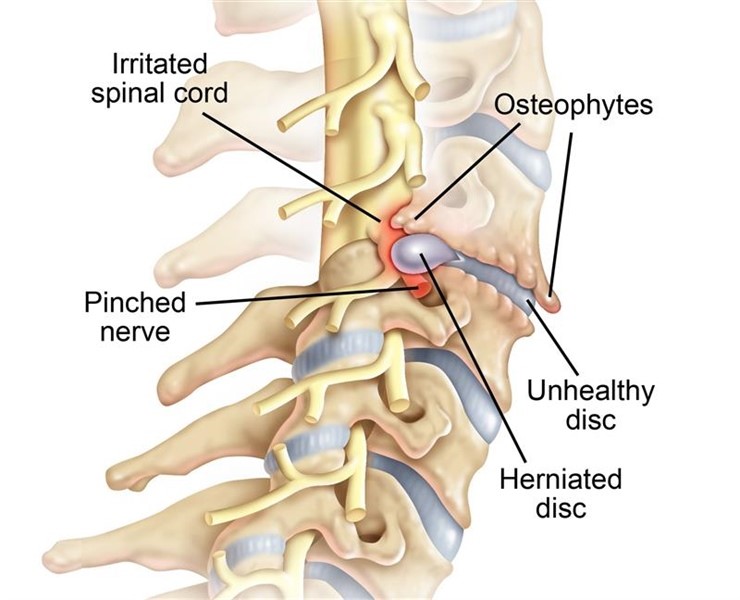
Cervical radiculopathy happens when a nerve in the neck becomes pinched or irritated. Normally, the nerves travel safely from the spinal cord in the neck down into the arms, carrying signals for strength and feeling. But with age, the discs in the neck can wear down, bulge, or even herniate (break open), and bone spurs can also form. These changes can narrow the space around the nerves.
When a nerve is pressed, it can cause symptoms like pain in the neck, shoulder, or arm, along with tingling, numbness, or weakness in the hand or fingers. Many patients describe sharp or shooting pain that follows the path of the nerve. This condition is fairly common as we get older, and while it can be uncomfortable, many people improve with time, rest, therapy, or medications. In some cases, surgery may be needed to take pressure off the nerve.

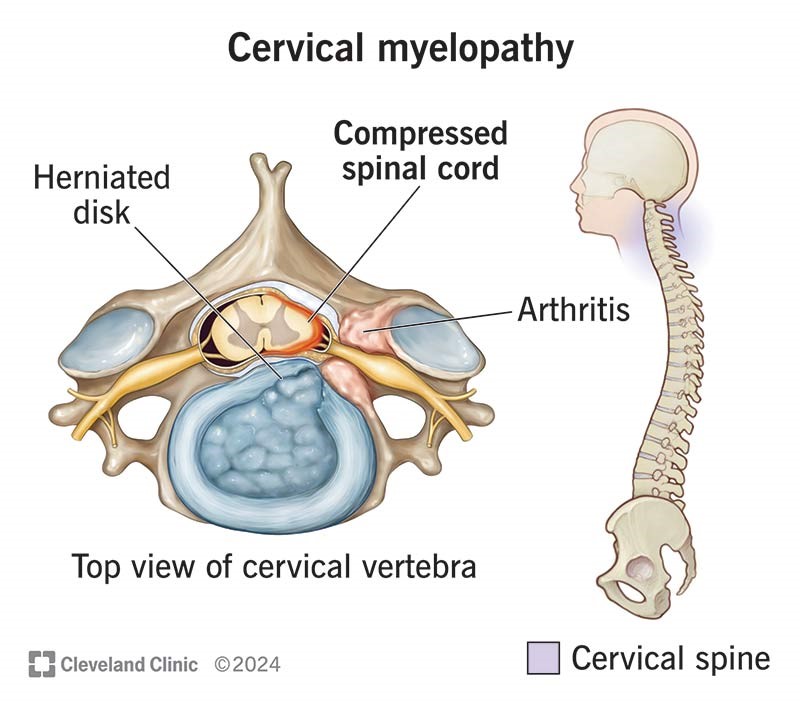
Cervical myelopathy happens when the spinal cord in the neck is squeezed or damaged. Normally, the spinal cord acts like a highway for signals, carrying messages from the brain down to the rest of the body. But with age, the spinal canal can narrow due to wear-and-tear changes, bone spurs, thickened ligaments, or a herniated disc. When this narrowing puts pressure on the spinal cord itself, it affects how signals travel.
Because the spinal cord controls many functions, cervical myelopathy can cause problems not only in the neck but also in the arms, hands, and legs. Common symptoms include trouble with hand coordination (like buttoning a shirt), unsteady walking, weakness, or numbness. Some people may notice changes in balance or bladder control. Unlike pinched nerves that usually affect just one arm, myelopathy can affect the whole body below the neck, and it often requires medical attention, sometimes including surgery, to prevent worsening symptoms.