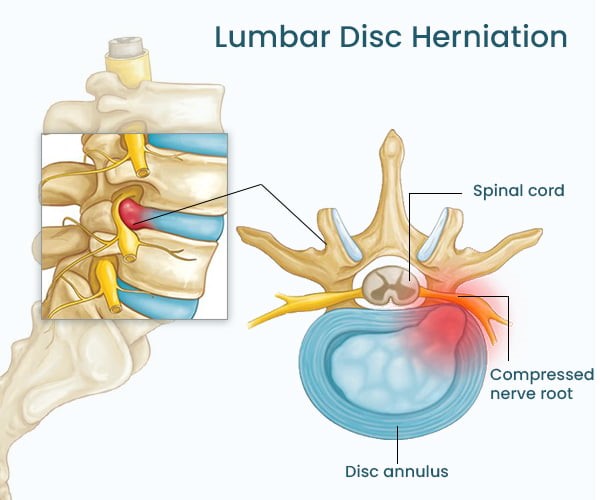
In your lower back, there are soft “cushions” called discs that sit between the bones of your spine. These discs help absorb shock and let your back move smoothly.
A lumbar disc herniation happens when part of one of these cushions wears out or tears, and the soft inside pushes out. This can press on nearby nerves, causing back pain, leg pain (sometimes called sciatica), or numbness and tingling down the leg. Many people improve with rest, physical therapy, or medications, but in some cases, surgery may be needed if the symptoms are severe or long-lasting.
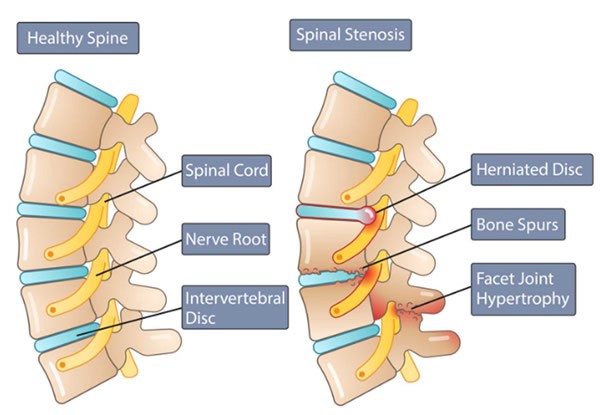
Lumbar stenosis happens when the space inside the spine becomes too narrow, usually in the lower back. Normally, the spinal canal gives the nerves plenty of room to travel down into the legs. But over time, age-related changes like thickened ligaments, bone spurs, or bulging discs can crowd that space. This puts pressure on the spinal nerves.
When the nerves are squeezed, it can cause symptoms such as back pain, leg pain, tingling, numbness, or weakness. Many people notice these symptoms get worse when standing or walking, and improve when sitting or leaning forward. It is a common condition in older adults and can limit daily activities, but treatments—both non-surgical and surgical—can help relieve pressure and improve quality of life.